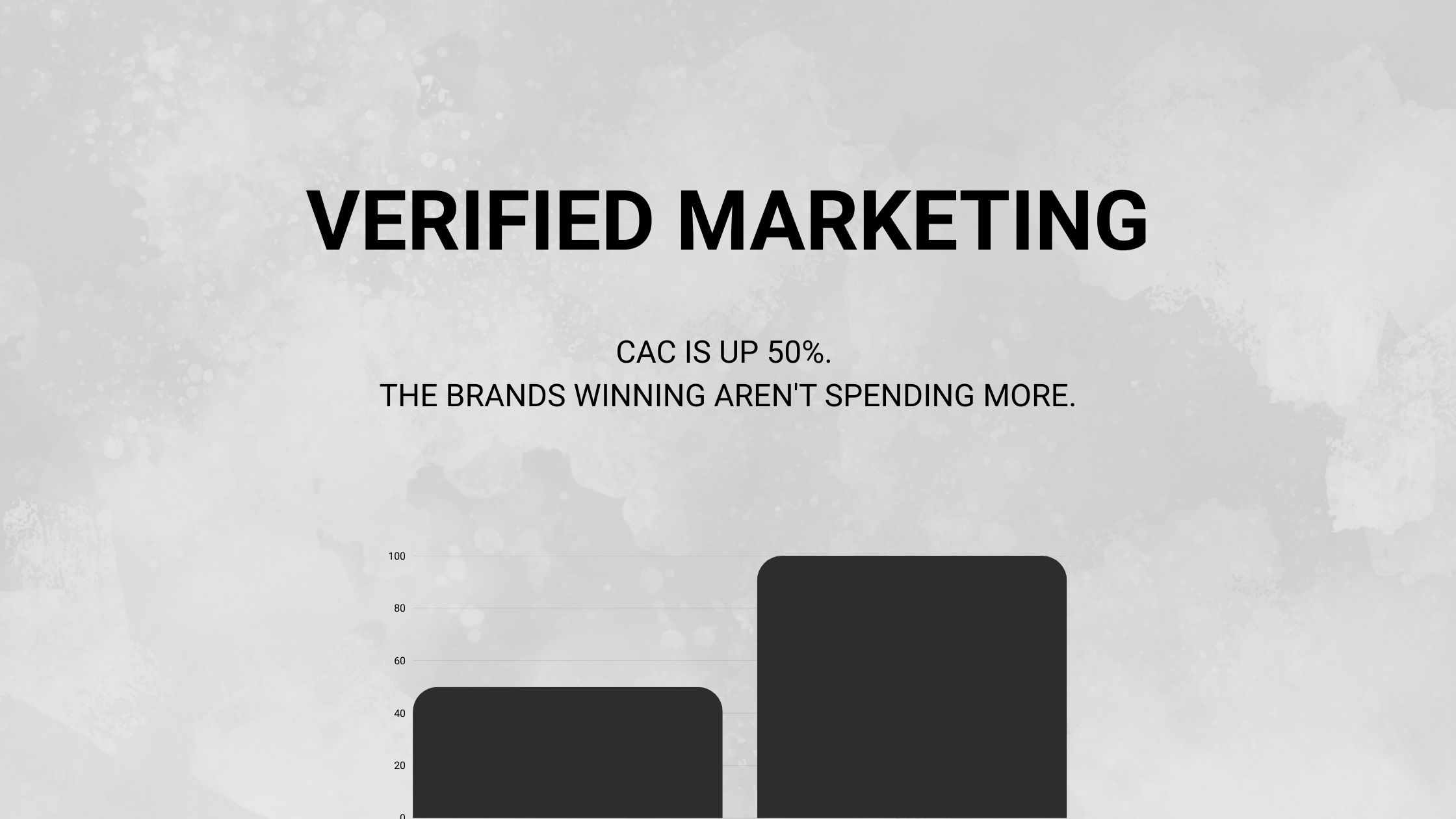
CAC Is Up 50%. The Brands Winning Aren't Spending More.

Jean Thirouin
Key Takeaway: Rising acquisition costs aren't a spending problem. They're a qualification problem. The brands beating the CAC crisis aren't outbidding competitors. They're getting better at identifying who's worth acquiring before they spend the money.
Customer acquisition costs have increased 50-100% for many D2C brands since 2020. Meta CPMs spiked after iOS 14. Google CPCs keep climbing. TikTok, once the cheap alternative, has seen rapid inflation as the platform matured.
The instinct is to respond with budget. Spend more to maintain volume. Optimize harder to squeeze out efficiency. Find the next underpriced channel before it gets expensive too.
This is a losing game.
The brands actually winning against rising CAC aren't playing it. They've realized the problem isn't how much they spend. It's who they spend it on.
The qualification gap
Here's what changed: targeting precision collapsed at the same time costs went up.
Privacy changes degraded the signals marketers used to identify high-value prospects. Lookalike audiences got fuzzier. Retargeting pools shrunk. Behavioral targeting became guesswork.
The result is that you're spending more to reach less qualified audiences. CAC went up not because acquiring good customers got more expensive, but because you're acquiring a worse mix of customers at a higher price.
Look at your cohort data. Blended CAC is up, but what about CAC on customers who actually retain? What about CAC on high-LTV segments specifically?
For many brands, the problem isn't that good customers cost more. It's that bad customers are drowning out the signal.
The budget trap
More budget doesn't fix a qualification problem. It amplifies it.
If your targeting can't distinguish high-value prospects from low-value ones, spending more just means buying more of the same mix. You'll get more customers, but the same proportion of them will churn, fail to upgrade, or require expensive support.
Your aggregate numbers might look okay. Revenue goes up because volume goes up. But unit economics erode beneath the surface. LTV:CAC ratios compress. Payback periods extend. The business becomes less efficient even as it grows.
The brands that scaled profitably through the CAC crisis didn't outspend the problem. They got more selective about who they were trying to reach.
Qualification before conversion
The traditional funnel puts qualification after acquisition. You spend to acquire customers, then figure out which ones are valuable based on how they behave.
This made sense when acquisition was cheap. You could afford to acquire broadly and let the product sort out who stayed.
At current CAC levels, that math doesn't work. By the time you learn a customer is low-value, you've already paid full price for them.
The shift is to qualify before you convert. Figure out who's worth acquiring before you spend the money.
This requires signal you didn't used to have. Not probabilistic guesses about who might be valuable, but verified facts about who actually is.
What's their status on a competitor platform? What tier are they? How long have they been a customer there? What's their purchase history?
These signals predict LTV far better than demographic proxies or behavioral inference. And they're now accessible through verification.
What smarter CAC looks like
When you can verify customer attributes before making an offer, acquisition economics change structurally.
You stop paying the same price for every customer. High-value verified prospects get bigger incentives because they're worth fighting for. Low-value prospects get smaller offers or none at all.
You stop subsidizing fraud. Verification eliminates fake claims and unqualified prospects gaming your acquisition offers.
You stop guessing about LTV. Verified competitor status and usage history give you real signal on what a customer is likely to be worth.
The outcome isn't lower spend across the board. It's better allocation of the spend you have. More dollars toward customers who will retain, upgrade, and refer. Fewer toward customers who will churn at the next discount.
The math that matters
CAC as a single number is almost meaningless now. The variance within your acquisition cohort matters more than the average.
Brands winning against rising CAC have shifted their focus:
From "what's our blended CAC?" to "what's our CAC on high-LTV segments?"
From "how do we reduce cost per acquisition?" to "how do we improve quality per acquisition?"
From "how do we reach more people?" to "how do we verify we're reaching the right people?"
The answer to rising acquisition costs isn't more budget. It's better qualification. The brands that figure this out will outcompete everyone still trying to spend their way through the problem.
Want to build verified engagement into your campaigns?
Whether you're launching reward programs, partnership campaigns, or dynamic incentive strategies, we can help you eliminate fraud and target with precision.
Schedule a demo or learn more at burnt.com.